Inside a Chemical Plant: Where Does Your Data Get Lost?
Chemical plants generate valuable data across procurement, production, quality, maintenance, inventory and logistics. However, when information remains scattered across disconnected systems, gaining a complete view of plant operations becomes difficult. Discover where chemical plant data gets lost, the challenges departments face and how data engineering connects operational information to improve visibility, efficiency and decision-making.
A chemical manufacturing plant is more than a network of reactors, pipelines, storage tanks and processing equipment. It is a complex operation where multiple departments work together to transform raw materials into finished products.
From procurement and production to quality control, maintenance and dispatch, every department plays an important role in keeping operations running efficiently.
Each department also generates valuable data.
Production teams monitor temperatures, pressures and batch quantities. Quality teams record laboratory results. Maintenance teams track equipment conditions, while inventory teams manage material availability.
However, this information is often stored across different systems, making it difficult to understand overall plant performance.
Understanding how a chemical plant works requires looking at each department, its responsibilities and where its operational data lives.
1. Procurement: Managing Raw Material Supply
Chemical manufacturing begins with procurement.
The procurement department purchases raw chemicals, solvents, catalysts, packaging materials and other resources required for production.
Its responsibilities include supplier selection, purchase order management, cost negotiation and delivery coordination.
A delay in one critical raw material can disrupt an entire production schedule, even when equipment and manpower are available.
Where the data lives:
- ERP systems such as SAP and Oracle
- Supplier management platforms
- Purchase order databases
- Excel spreadsheets
Key data: Supplier details, purchase quantities, material costs, delivery schedules and supplier performance.
The challenge: Procurement may know that materials have been ordered, but production teams may not know whether they have arrived or passed quality inspection.
Connecting procurement and inventory information improves material visibility and supports more accurate production planning.
2. Warehouse and Inventory: Tracking Material Availability
Once raw materials arrive, warehouse teams manage their storage, handling and movement.
Chemical inventory requires careful monitoring because different materials may have specific storage conditions, shelf-life requirements and handling procedures.
Warehouse teams track material quantities, batch numbers, storage locations and stock movements.
Where the data lives:
- Warehouse Management Systems (WMS)
- ERP inventory modules
- Barcode and RFID systems
- Inventory registers
Key data: Stock levels, material movements, batch identification, storage locations and consumption history.
The challenge: Inventory systems may show available stock, but some materials could be reserved or awaiting quality approval.
Integrating inventory, quality and production data helps teams understand which materials are actually available for manufacturing.
3. Production Planning: Scheduling Manufacturing Activities
Production Planning and Control (PPC) determines what needs to be manufactured, when production should begin and which resources are required.
Chemical plants often use shared reactors and processing equipment for multiple products.
Planning teams must consider raw material availability, equipment capacity, processing duration and maintenance schedules.
For example, an unexpected reactor breakdown can affect several scheduled production batches.
Where the data lives:
- ERP production modules
- Manufacturing Execution Systems (MES)
- Production scheduling software
- Planning spreadsheets
Key data: Production orders, batch schedules, planned quantities, material requirements and equipment availability.
The challenge: Production plans often depend on information collected manually from different departments.
Connecting planning systems with inventory, maintenance and production data enables more responsive scheduling.
4. Manufacturing Operations: Where Chemical Production Happens
The production department converts raw materials into finished or intermediate chemical products.
Depending on the facility, manufacturing processes may involve mixing, heating, cooling, chemical reactions, filtration, distillation or drying.
Chemical plants may operate through batch manufacturing, continuous processing or a combination of both.
Operators monitor parameters such as temperature, pressure, flow rate and reaction time to maintain process stability and product consistency.
Where the data lives:
- Distributed Control Systems (DCS)
- SCADA systems
- Programmable Logic Controllers (PLCs)
- Manufacturing Execution Systems (MES)
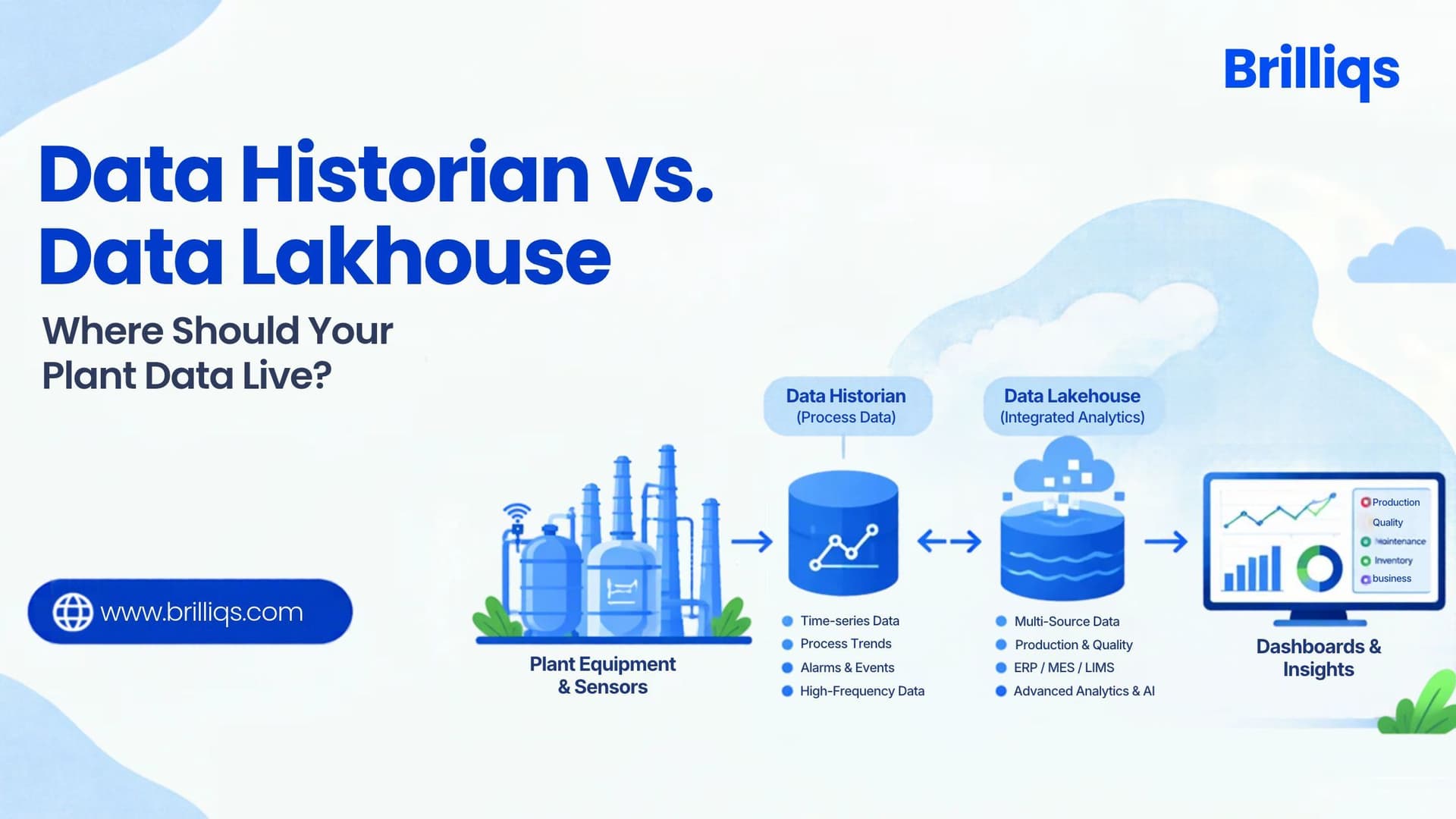
- Process historians
Key data: Process parameters, batch duration, production quantities, equipment status and alarms.
The challenge: Control systems collect large volumes of production data, but this information may remain disconnected from management reports.
Integrating operational data with analytical platforms improves visibility into production performance and process trends.
5. Quality Control: Maintaining Product Standards
Quality Control (QC) ensures that raw materials, intermediate products and finished goods meet required specifications.
Laboratory teams test chemical composition, purity, concentration and other product specific characteristics.
A completed production batch may remain unavailable for dispatch until quality testing and approval are finished.
Where the data lives:
- Laboratory Information Management Systems (LIMS)
- Quality Management Systems (QMS)
- ERP quality modules
- Laboratory reports
Key data: Test results, product specifications, batch approval status, quality deviations and inspection records.
The challenge: Production systems may indicate that a batch is complete while quality systems show that approval is pending.
Connecting laboratory and production data improves traceability and helps identify relationships between process conditions and product quality.
6. Maintenance: Ensuring Equipment Reliability
Chemical plants rely on reactors, pumps, compressors, heat exchangers, boilers and other critical equipment.
Maintenance teams perform inspections, preventive maintenance, repairs and equipment monitoring to reduce unexpected failures.
A breakdown in one important machine can interrupt multiple production activities.
Where the data lives:
- Computerized Maintenance Management Systems (CMMS)
- Enterprise Asset Management (EAM) systems
- ERP maintenance modules
- Equipment monitoring platforms
Key data: Equipment breakdowns, maintenance schedules, work orders, repair duration and spare parts consumption.
The challenge: Maintenance records and production data are often stored separately.
Connecting these systems helps manufacturers analyze downtime patterns, equipment availability and recurring maintenance issues.
7. Utilities: Supporting Plant Operations
Chemical manufacturing depends on electricity, steam, cooling water, compressed air and other utilities.
These resources support heating, cooling, equipment operation and process stability.
Unexpected changes in utility availability can affect production efficiency and operating costs.
Where the data lives:
- Energy Management Systems (EMS)
- SCADA systems
- Smart meters
- Process historians
Key data: Electricity consumption, steam generation, water usage, utility pressures and energy costs.
The challenge: Plants may know their total energy consumption but lack visibility into energy usage by individual processes or production batches.
Combining utility and production data helps identify energy consumption patterns and opportunities for improvement.
8. Environment, Health, and Safety: Managing Operational Risks
Environment, Health and Safety (EHS) teams help chemical plants maintain safe operations and meet applicable environmental requirements.
Their responsibilities include safety inspections, incident reporting, environmental monitoring and corrective action management.
Where the data lives:
- EHS management software
- Incident reporting systems
- Environmental monitoring applications
- Compliance registers
Key data: Safety incidents, inspection findings, environmental measurements, corrective actions and compliance records.
The challenge: Safety and environmental information may be distributed across multiple systems and manual reports.
Integrating relevant records improves reporting consistency and management visibility while keeping critical safety controls independent.
9. Logistics and Dispatch: Delivering Finished Products
After production and quality approval, finished chemicals move to packaging, storage and dispatch.
The logistics department coordinates transportation, shipment documentation, customer orders and delivery schedules.
Even when products are ready, dispatch may be delayed by packaging shortages or transportation constraints.
Where the data lives:
- ERP sales and distribution modules
- Transportation Management Systems (TMS)
- Warehouse Management Systems
- Shipment tracking platforms
Key data: Shipment quantities, dispatch dates, customer orders, transportation details and delivery status.
The challenge: Logistics teams depend on information from production, quality, inventory and sales departments.
Connected data improves shipment planning and provides better visibility into order fulfillment.
10. Finance and Management: Measuring Plant Performance
Finance and plant management teams evaluate manufacturing costs, operational performance, inventory value and profitability.
Understanding actual production costs often requires combining raw material consumption, energy usage, equipment performance and financial information.
Where the data lives:
- ERP financial modules
- Business Intelligence (BI) platforms
- Cost accounting systems
- Management reports
Key data: Production costs, material expenses, inventory value, energy spending and profitability.
The challenge: Financial and operational data may be stored separately, making it difficult to understand how manufacturing activities influence business performance.
Connecting these datasets supports more consistent reporting and informed management decisions.
Why Chemical Plant Data Remains Disconnected
Chemical plants generate significant amounts of information every day.
Procurement tracks material purchases. Production systems monitor manufacturing conditions. Laboratories store test results. Maintenance applications record equipment history and finance systems track costs.
However, each department often uses different applications.
Common challenges include:
- Disconnected ERP, MES, SCADA and laboratory systems
- Inconsistent data formats and equipment identifiers
- Manual data collection and spreadsheet-based reporting
- Limited visibility across departments
- Difficulty combining operational and financial information
As a result, teams may spend considerable time collecting information instead of analyzing plant performance.
How Data Engineering Connects Chemical Plant Operations
Data engineering helps manufacturers bring information from different systems into a reliable analytical environment.
Through data integration, automated pipelines and data quality processes, organizations can create a more consistent view of manufacturing operations.
For example, information from ERP, MES, SCADA, LIMS and maintenance systems can be combined to analyze production performance alongside quality results, equipment downtime and operating costs.
Connected manufacturing data can support:
Production Visibility: Monitor production progress, batch performance and manufacturing delays.
Equipment Analytics: Analyze downtime patterns, maintenance history and asset availability.
Quality Analysis: Compare laboratory results with manufacturing process conditions.
Inventory Management: Improve visibility into material availability and consumption.
Energy Monitoring: Understand utility consumption across processes and production batches.
Management Dashboards: Provide consistent operational information to plant heads and decision makers.
These capabilities help manufacturers move from disconnected departmental reports toward more coordinated, data driven operations.
How Brilliqs Helps Chemical Manufacturers
At Brilliqs, we help organizations build reliable data foundations through Data Engineering, Data Integration, Data Management, Analytics and AI ready data solutions.
For chemical manufacturers, this includes connecting information distributed across production, quality, maintenance, inventory and enterprise systems.
By developing automated data pipelines, improving data quality and modernizing analytical platforms, Brilliqs supports better operational visibility and more consistent reporting.
A connected data environment also creates a stronger foundation for advanced analytics and future AI initiatives.
Conclusion
A chemical plant operates through the combined efforts of multiple departments, from procurement and production to quality, maintenance, logistics and finance.
Each department generates valuable information but when that information remains scattered across different systems, understanding overall plant performance becomes difficult.
Connecting departmental data helps manufacturers improve operational visibility, strengthen coordination and make more informed decisions.
Chemical plants already generate valuable data. The real opportunity lies in making that data work together.
With a reliable data engineering foundation, manufacturers can transform disconnected information into meaningful operational insights.
Explore how Brilliqs can help connect your manufacturing data and build a stronger foundation for analytics and AI.