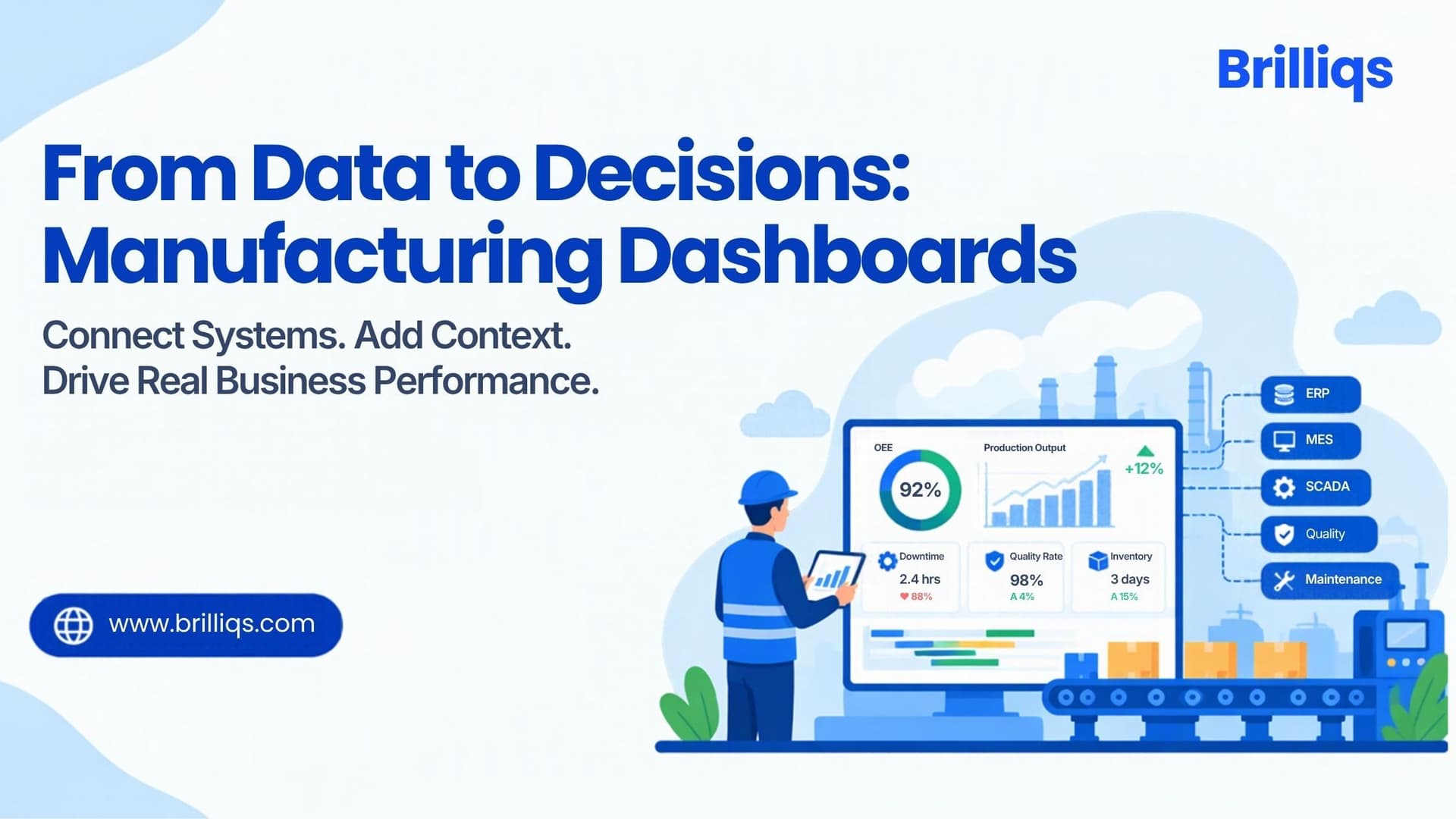
Why Your Manufacturing Production Plans Keep Failing
Discover why manufacturing production plans fail despite careful scheduling. Learn how data silos, inaccurate inventory, machine downtime and poor production visibility disrupt schedules, reduce efficiency and increase operational costs.
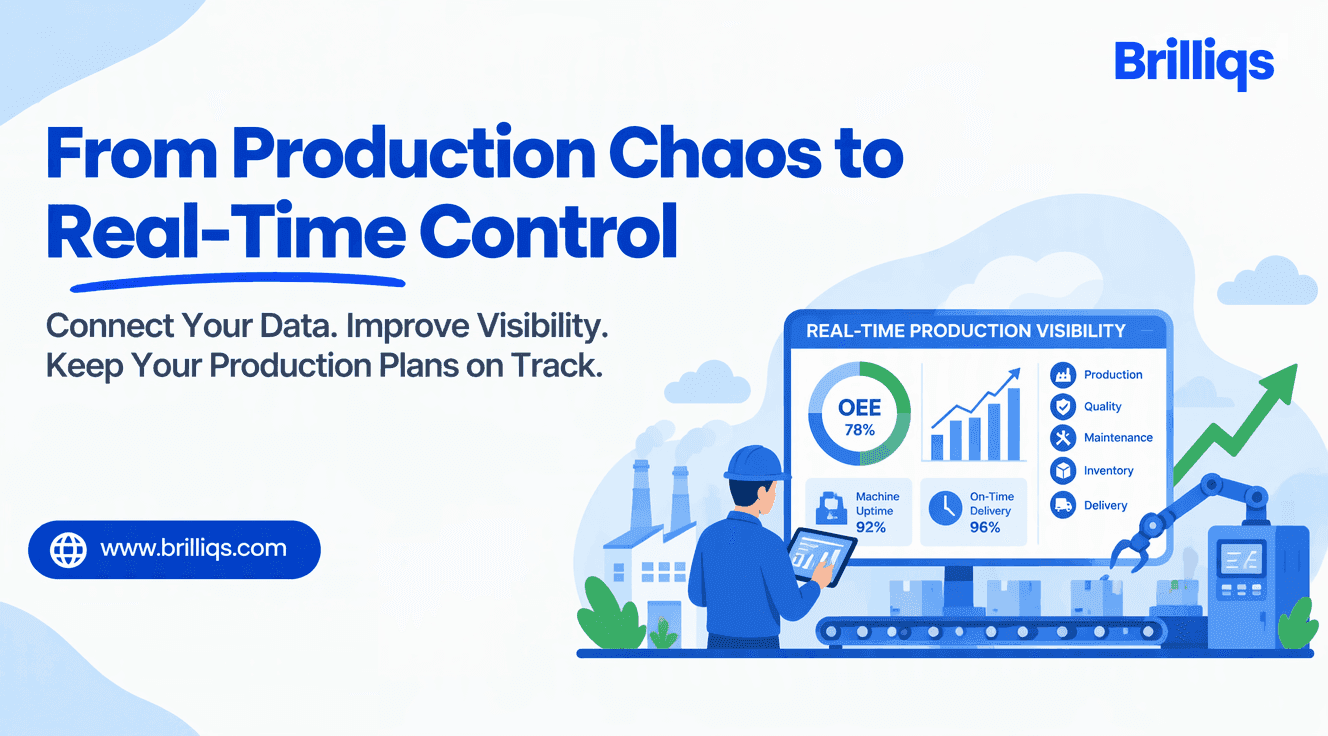
Manufacturing production planning plays a critical role in ensuring smooth operations, meeting delivery deadlines and controlling production costs. Manufacturers create production schedules based on customer demand, material availability, machine capacity and workforce requirements.
However, even carefully prepared production plans often fail once actual operations begin.
A production schedule may look perfect on paper, but unexpected machine breakdowns, material shortages, inaccurate inventory records and changing customer demands can quickly disrupt the entire plan.
The problem is not always poor planning. In many cases, manufacturers lack accurate, connected and timely information to support their production decisions.
1. Production Plans Are Based on Inaccurate Data
Production planning depends on reliable information from multiple departments, including sales, inventory, procurement, production and maintenance.
When these departments maintain separate spreadsheets or disconnected systems, production planners may work with outdated information.
For example, the planning team may schedule a production order based on available inventory, only to discover that the required raw materials have already been allocated to another order.
This creates delays, rescheduling and unnecessary pressure on the shop floor.
How to improve it:
- Maintain accurate inventory and production records.
- Connect ERP, inventory and production systems.
- Ensure production planners work with updated information.
- Reduce dependency on manual data entry.
2. Material Availability Is Not Properly Considered
A production plan is only achievable when the required materials are available at the right time.
Manufacturers often experience production delays because raw materials arrive late, inventory records are inaccurate or procurement teams lack visibility into upcoming requirements.
Even a small material shortage can affect multiple production orders and delay customer deliveries.
When material availability is not connected with production planning, teams may create schedules that cannot be executed.
How to improve it:
Integrate inventory, procurement and production planning data to identify material shortages before production begins. This allows teams to plan purchases, prioritize orders and avoid unnecessary production interruptions.
3. Machine Downtime Disrupts Production Schedules
Production plans often assume that machines will operate according to their expected capacity.
However, unexpected equipment breakdowns, maintenance delays and reduced machine performance can significantly affect production output.
When a critical machine stops working, the production schedule may need to be adjusted across multiple orders.
Without real-time machine performance data, production managers may only discover the problem after output has already fallen behind.
How to improve it:
Monitor machine availability, downtime, OEE and maintenance performance. Use historical machine data to identify recurring issues and improve maintenance planning.
4. Production Planning and Shop Floor Operations Are Disconnected
One of the most common reasons production plans fail is the gap between planning and execution.
Production planners create schedules in ERP systems, while shop floor teams manage daily operations using manual reports, spreadsheets or verbal updates.
As a result, the planning team may not know whether a production order is progressing as expected.
A schedule may show that an order should be completed by 4 PM, while the actual production process is already several hours behind.
Without timely updates, planners cannot make informed adjustments.
How to improve it:
Connect production planning with shop floor data to monitor actual production progress, machine performance and order completion.
This helps teams identify deviations early and adjust schedules before delays become more serious.
5. Customer Demand Keeps Changing
Manufacturing production plans are often created using sales forecasts and customer orders.
However, demand can change because of urgent orders, cancellations, seasonal fluctuations or shifting customer priorities.
When production schedules cannot adapt quickly, manufacturers may experience excess inventory, delayed orders or frequent rescheduling.
A rigid production plan may become outdated before the production cycle is completed.
How to improve it:
Use updated demand information and production performance data to review schedules regularly. Build flexibility into planning so teams can respond to changing priorities without disrupting the entire operation.
6. Production Teams Lack Real-Time Visibility
Manufacturers may collect large amounts of production data but still struggle to understand what is happening across their facilities.
Production managers need visibility into:
- Planned vs. actual production
- Machine availability and downtime
- Production order status
- Material consumption
- Quality performance
- Work-in-progress inventory
When this information is scattered across multiple systems, teams spend more time collecting reports than solving operational problems.
How to improve it:
Use connected manufacturing dashboards to bring production information into a single view. Real-time visibility helps managers identify bottlenecks, monitor performance and take corrective action faster.
7. Production Performance Is Not Reviewed Properly
A production plan should not end with scheduling. Manufacturers must also evaluate whether the plan was executed successfully.
Without comparing planned performance with actual results, teams may continue repeating the same planning mistakes.
For example, if a production line consistently takes longer than expected to complete certain products, future schedules should account for that difference.
Ignoring historical production performance leads to unrealistic planning assumptions.
How to improve it:
Track key manufacturing KPIs such as:
- Production Plan Adherence
- OEE
- Schedule Attainment
- Cycle Time
- Downtime
- Production Yield
Review these metrics regularly to identify planning gaps and improve future schedules.
From Production Planning to Production Visibility
Manufacturing production plans fail when planning decisions are made without accurate information about actual operations.
Disconnected systems, inaccurate inventory, machine downtime and limited shop floor visibility make it difficult for manufacturers to execute schedules as expected.
The solution is not simply to create more detailed production plans. It is to connect planning with real-time operational data.
When ERP, inventory, machine and shop floor data work together, manufacturers can understand what is happening, identify problems earlier and make better production decisions.
At Brilliqs, connected data and manufacturing analytics help businesses improve production visibility, monitor operational performance and make data-driven decisions.
When production data becomes visible, production planning becomes more reliable.
Learn more about Data Engineering Services at Brilliqs.