How Disconnected Data Is Damaging Your Manufacturing Business
Discover how disconnected manufacturing data creates reporting delays, production inefficiencies, inventory errors and poor business decisions. Learn how connected data helps manufacturers improve visibility, reduce operational losses and make informed decisions.
Manufacturing businesses produce information at every stage of their operations. Machines generate performance readings, ERP platforms maintain purchasing and stock records, quality departments document inspections and finance teams monitor production expenses.
The challenge is that this information often remains separated across different systems.
Having data available in several applications does not necessarily give a manufacturer a complete picture of its operations. When departments rely on isolated spreadsheets, software tools and manually prepared reports, the business can struggle to understand what is actually happening on the factory floor.
These information gaps can affect production schedules, material availability, product quality, equipment reliability and financial performance.
1. Production Teams Cannot Respond Quickly to Changes
Manufacturing schedules rarely remain unchanged throughout the day. Equipment problems, material shortages, quality issues and unexpected order changes can affect planned production.
When operational updates are not shared between production systems and planning tools, managers may continue working with information that no longer reflects actual conditions.
Consider a production line that stops unexpectedly during the afternoon shift. The operator records the incident, but the production report is updated only after the shift ends. Planning teams may not learn about the lost production until the following day.
By then, the delay could have affected delivery commitments or the next production schedule.
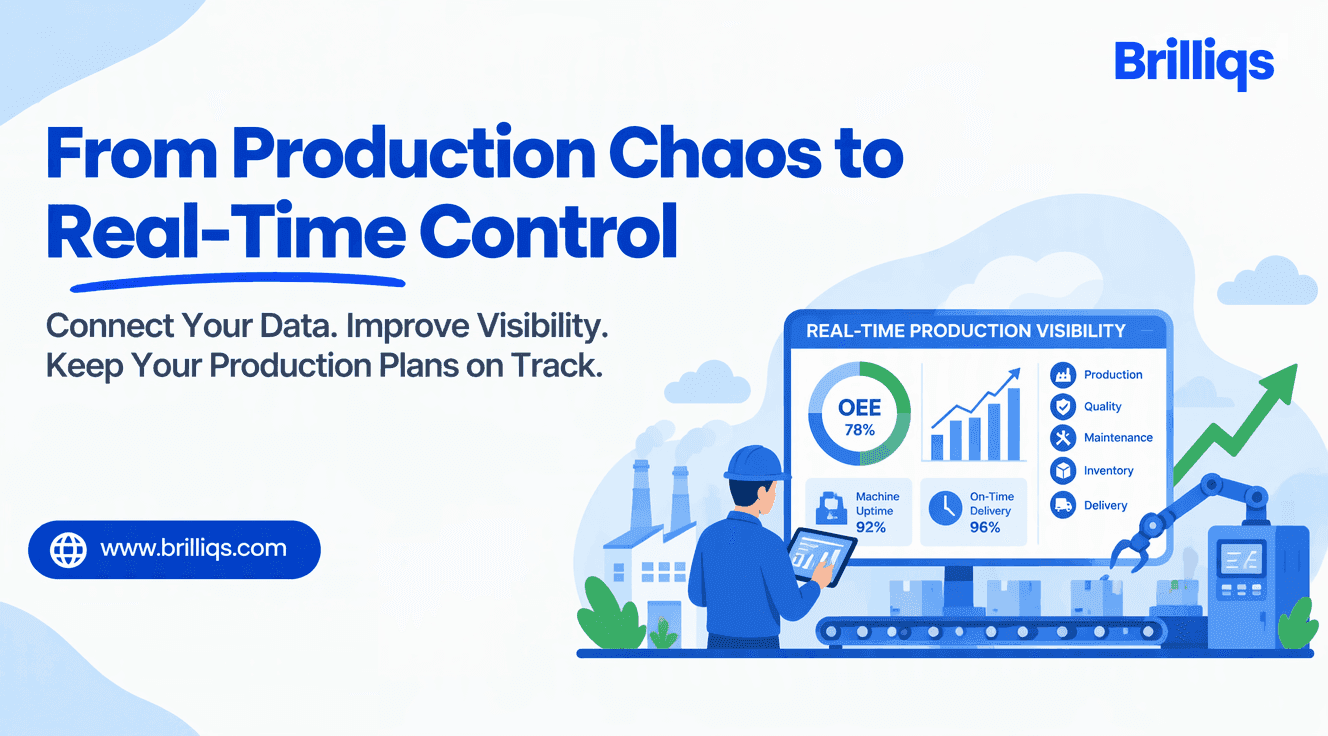
Connecting production information with planning and reporting systems helps teams identify deviations sooner and respond before small issues create larger disruptions.
2. Incorrect Inventory Information Creates Unnecessary Costs
A manufacturing operation depends on having the right materials available at the right time.
When warehouse records, ERP inventory and production requirements are not synchronized, the stock quantity shown in one system may differ from the quantity physically available.
For example, a production planner may schedule an order based on the inventory displayed in the ERP system. However, some materials may already have been consumed, moved or reserved without the records being updated correctly.
Such inconsistencies can result in:
- Production orders waiting for required materials
- Unplanned purchases at higher prices
- Excess stock occupying warehouse space
- Difficulty locating raw materials or finished goods
- Poor coordination between procurement and production
Reliable inventory information allows manufacturers to plan material requirements more accurately and avoid preventable production interruptions.
3. Employees Spend More Time Collecting Data Than Analyzing It
In many factories, preparing a management report involves gathering information from several departments.
Employees may download production figures, request quality records, collect inventory reports and combine everything into spreadsheets. They then need to check the numbers, resolve inconsistencies and format the final report.
This repeated manual work can consume hours that could otherwise be spent investigating operational problems.
It also creates opportunities for calculation errors, outdated figures and inconsistent reporting formats.
When data collection and preparation are streamlined, teams can spend less time assembling reports and more time understanding what the numbers reveal about business performance.
4. Identifying the Cause of Quality Issues Becomes Difficult
Manufacturing quality is influenced by several connected factors, including material characteristics, process settings, equipment conditions and inspection results.
If these records are maintained separately, investigating a defective product or failed batch becomes more complicated.
A quality team may need to examine the material lot, production history, machine parameters and inspection results to understand why a product did not meet specifications.
When these details cannot be easily connected, the investigation may take longer and corrective action may be delayed.
Integrating quality records with production and material data can help manufacturers establish clearer traceability, recognize recurring patterns and investigate defects more effectively.
5. Equipment Losses Are Harder to Understand
Industrial equipment produces information that can help explain how effectively a factory is operating. This may include running hours, stoppage events, operating speed, temperature readings and machine alarms.
However, collecting machine data alone is not enough. The information also needs to be connected with production output and maintenance history.
Without this context, manufacturers may overlook repeated interruptions or fail to understand their impact on production.
For instance, several brief stoppages may appear insignificant when viewed individually. Across a full week, however, these interruptions could represent substantial lost operating time.
Connecting equipment information with production and maintenance records helps teams examine:
- The equipment responsible for recurring production losses
- The effect of unplanned stoppages on output
- Changes in breakdown frequency
- Maintenance activities associated with equipment reliability
This gives maintenance and production teams a stronger basis for identifying improvement opportunities.
6. Different Departments Report Different KPI Results
Manufacturing performance is commonly measured through indicators such as:
- Overall Equipment Effectiveness (OEE)
- Production output and efficiency
- First Pass Yield
- Scrap and rejection rates
- Equipment downtime
- Inventory turnover
- Production cycle time
- Manufacturing cost per unit
These indicators are useful only when the underlying information is consistent.
If departments use different data sources, reporting periods or calculation methods, the same KPI may produce different results.
For example, one report may calculate machine downtime from equipment events, while another uses the stoppage duration recorded by shift supervisors. The figures may not agree, even though both reports are intended to measure the same performance.
Such differences make it difficult for managers to trust dashboards or compare results.
Standardized KPI definitions, consistent calculations and dependable data sources are essential for meaningful manufacturing performance analysis.
7. Management Decisions Lack the Full Business Picture
Manufacturing leaders regularly make decisions about production capacity, equipment investments, supplier performance, inventory levels and process improvements.
These decisions often require information from several departments.
A production report may explain how much output was achieved, but it may not show the cost of material waste or the financial impact of downtime. Similarly, a financial report may show rising expenses without identifying the operational factors responsible for them.
When operational and financial information remains separated, managers may see individual problems without understanding their relationship to the wider business.
Bringing these information sources together helps leadership evaluate performance with greater context and make decisions based on a more complete view of operations.
8. Comparing Performance Across Manufacturing Plants Becomes Complicated
Businesses operating multiple facilities often face differences in software, reporting practices and operational measurements.
One plant may record output in pieces, another in kilograms and another in batches. Facilities may also use different definitions for downtime, production efficiency or quality performance.
As a result, comparing plant performance can require additional manual adjustments and explanations.
A unified data environment can help standardize reporting across facilities and bring production, inventory and quality information into a consistent format.
This makes it easier for leadership to review performance across locations, identify operational differences and share successful practices between plants.
9. Connecting Manufacturing Data Creates a Stronger Foundation
Improving data connectivity begins with understanding where operational information is generated and how different systems use it.
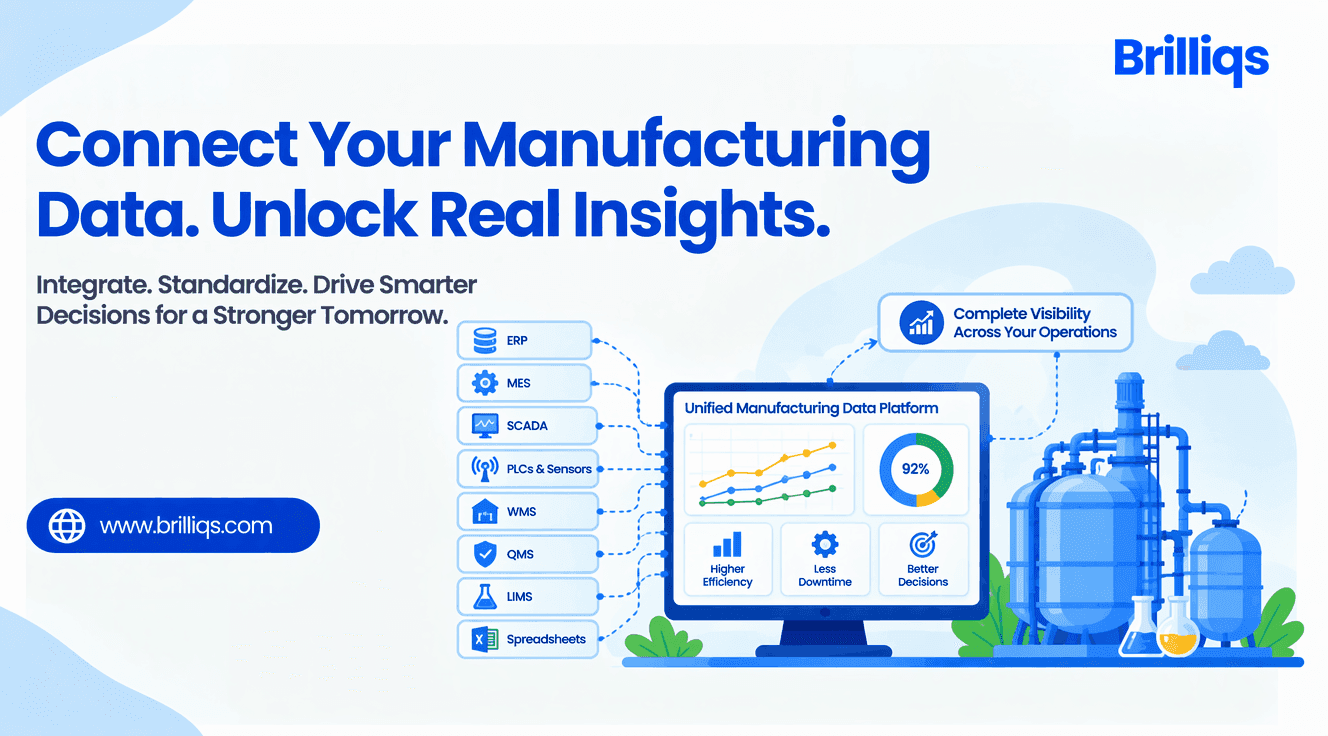
Manufacturers may need to bring together information from:
- Enterprise Resource Planning (ERP) systems
- Manufacturing Execution Systems (MES)
- Supervisory Control and Data Acquisition (SCADA)
- Industrial historians
- Programmable Logic Controllers (PLCs) and sensors
- Warehouse Management Systems (WMS)
- Quality Management Systems (QMS)
- Laboratory Information Management Systems (LIMS)
- Spreadsheets and departmental applications
A connected data environment can collect information from these sources, apply appropriate transformations, validate records and organize the results for business use.
A reliable Data Engineering foundation helps manufacturers build and maintain data pipelines that support reporting, analytics and business intelligence.
The purpose is not simply to combine information in one location. It is to ensure that different teams can access consistent, meaningful data when they need it.
10. Turning Data Disconnection Into Operational Visibility
When manufacturing information is connected and standardized, businesses can address many of the problems caused by fragmented systems.
| Common Data Problem | Potential Improvement |
|---|---|
| Production updates arrive late | More timely production information |
| Stock records do not match | Better inventory visibility |
| Reports require manual consolidation | More efficient reporting processes |
| Quality investigations take longer | Improved product and batch traceability |
| Equipment losses remain unnoticed | Better downtime analysis |
| KPI results vary between teams | Consistent performance measurement |
| Plant reports use different formats | Easier comparison across facilities |
| Operational and financial data remain separate | More complete business performance insights |
Connected information helps manufacturing teams understand where problems occur, how they affect operations and which actions may improve performance.
Conclusion
Disconnected data can create challenges that extend far beyond reporting. It can interfere with production planning, increase inventory uncertainty, delay quality investigations and make equipment performance difficult to evaluate.
Manufacturers may already have ERP platforms, production systems, industrial equipment and analytics tools. However, these investments cannot deliver their full value when important information remains isolated.
By improving data integration, establishing consistent metrics and creating dependable data pipelines, manufacturers can build a clearer view of their operations.
The real benefit of connected manufacturing data is the ability to transform scattered records into useful information that supports timely decisions, better coordination and stronger business performance.